Retro Air Conditioner Icons Embroidery Review
As a designer who spends half my life staring at stitch charts and the other half trying to explain to clients why their logo won’t work in thread, I approach every new download with a mix of hope and skepticism. We have all been there: you find a cute graphic online, think it would look adorable on a tote bag, only to realize halfway through stitching that the details are too small for the fabric or the theme clashes with your brand aesthetic. That is exactly why I took Retro Air Conditioner Icons for a spin before recommending it to my network of crafters and small business owners. This isn’t just another clip art sheet; it is a utilitarian line art vector set that demands a specific kind of design intelligence to translate successfully into a finished product.
First Impressions: The Mood and Visual Personality
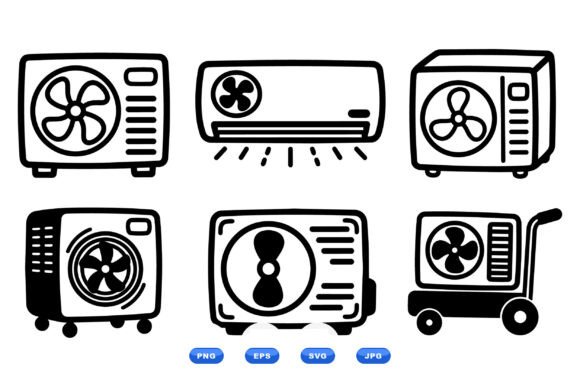
The moment you open the ZIP folder containing the SVG files, the vibe is immediately clear. These are not photorealistic attempts at capturing HVAC machinery. Instead, they are simplified, stylized representations of air conditioners and fan units. The line art style lends itself perfectly to a mid-century modern or vintage industrial aesthetic. For an embroidery project, this simplicity is a gift. In the world of machine embroidery, less is often more because thread cannot replicate the subtle gradients of a photograph without looking muddy or overly dense.
The visual personality here is clean, nostalgic, and slightly playful. It feels like something you might see on a 1970s appliance box or in a retro editorial layout. This makes it incredibly versatile for brands that want to evoke feelings of comfort, nostalgia, or summer relaxation without being cliché. Unlike generic snowflake designs for winter or pumpkins for autumn, these icons offer a unique seasonal touchpoint for late spring and early summer projects. They provide a focal point that is recognizable but leaves enough negative space for the fabric texture to breathe, which is crucial for high-quality handmade goods.
Real-World Application: From Screen to Stitch
Let’s talk about how this design performs when we move from digital mockups to physical reality. I tested the concept across several common small business merchandise categories to see where Retro Air Conditioner Icons truly shines. The most immediate application that came to mind was a custom embroidered tote bag for a local coffee shop or a boutique selling summer essentials. The icon works beautifully as a standalone chest print or even as a repeated pattern along the side panels of a canvas bag. Because the lines are crisp, the embroidery holds its shape well, provided you use the right stabilizer.
I also envision this design thriving on sweatshirts and hoodies. As the weather transitions, people look for apparel that signals the change of season. A subtle, minimalist air conditioner icon on a heavyweight cotton blend can signal "summer vibes" in a sophisticated way. It avoids the tackiness of large, cartoonish graphics while still communicating the theme clearly. For baby clothes, the scaled-down version of these icons could be adorable on a onesie or a muslin blanket, perhaps paired with soft pastel threads to create a nursery decor item that parents actually want to keep after the baby outgrows it.
Another strong use case is for kitchen towels and aprons. If you are targeting home bakers or lifestyle influencers, a tea towel featuring one of these fan unit icons adds a quirky, modern touch to a traditionally functional item. It elevates a simple kitchen accessory into a gift-worthy object. Similarly, for embroidered patches, the self-contained nature of each icon means they can be easily hooped and stitched onto denim jackets, backpacks, or caps without overwhelming the wearer. The design assets are structured in a way that allows for easy resizing, which is vital for creating cohesive collections for an Etsy shop.
Where to Exercise Caution: Technical Limitations
No design is perfect for every surface, and Retro Air Conditioner Icons is no exception. While the line art style is forgiving, there are specific scenarios where you need to tread carefully. First, consider the hoop size. If you attempt to stitch these icons on a very small hoop, such as those used for jewelry tags or tiny sock cuffs, you may lose the integrity of the lines. The curves of the fan blades or the rectangular body of the AC unit might become jagged if the resolution of the digitization (or the precision of your machine) isn't high enough. Always test on scrap fabric first to ensure the smallest details remain distinct.
Fabric choice is equally critical. Textured fabrics like heavy waffle-knit towels or thick chenille blankets can obscure fine line art. The thread might sink into the weave, making the icon look blurry rather than crisp. Thin or stretchy fabrics, such as lightweight jersey or silk blends, require robust stabilization to prevent puckering. If the fabric distorts during stitching, the geometric precision of the retro icons will be lost, resulting in a warped appearance that looks unprofessional. Dark fabrics present another challenge; while bold contrast is good, ensure your thread colors are saturated enough to stand out against the background. Light grey thread on a black shirt, for example, might lack the punch needed for the design to be legible from a distance.
Furthermore, avoid placing this design on highly curved surfaces like the front panel of a fitted baseball cap unless you are using a specialized cap frame and have significant experience. The curvature can distort the straight lines of the air conditioner housing, making it look slanted or misaligned. Also, be mindful of dense stitch areas. If you decide to add heavy fill stitches around the icon to create a border, you risk making the piece stiff and uncomfortable. The beauty of this design lies in its minimalism; let it speak for itself rather than burying it under excessive decorative accents.
Design Notes for the Savvy Crafter
To get the best results from this embroidery file, attention to detail is non-negotiable. Start by reviewing the stitch density in your software. Line art typically relies on satin stitches and running stitches, so ensure the underlay is sufficient to hold the threads in place without pulling the fabric. When selecting thread colors, think about contrast and mood. A classic white or navy thread on a natural canvas bag will highlight the retro aesthetic, while a bright yellow or teal thread can make the design pop on darker garments.
It is also wise to inspect the design in black and white mode within your digitizing software. This helps you visualize how the shapes will interact with the fabric color, ensuring that positive and negative spaces are balanced. Check whether the design works for both personal use and commercial projects. Since this is a vector sheet, verify the licensing terms before mass-producing items for sale on platforms like Etsy or at craft fairs. You want to protect your craft business from potential copyright issues down the line.
Finally, always run a test stitch on the actual fabric you intend to use. This step saves time and money by revealing any tension issues or color mismatches before you commit to the final product. By treating Retro Air Conditioner Icons with the respect it deserves—understanding its strengths in clean line work and its limitations on textured or stretchy materials—you can create professional-grade handmade products that resonate with customers. Whether you are making personalized gifts for friends or building a brand identity for your small shop product line, this design offers a fresh, stylish alternative to overused seasonal motifs. It is a practical, visually appealing asset that, when handled with care, can significantly boost the perceived value of your finished product.