Retro Breakfast Clipart Pack Review
As a designer who spends half my day staring at stitch density maps and the other half trying to explain to clients why their logo won’t work on a baseball cap, I approach every new digital asset with a healthy dose of skepticism. We are drowning in clipart. Most of it is either too complex for a standard 4x4 hoop or so generic that it lacks any soul. But when I pulled down the Retro Breakfast Clipart Pack, I actually stopped scrolling. This isn’t just another collection of random icons; it feels like a cohesive visual story waiting to be stitched.
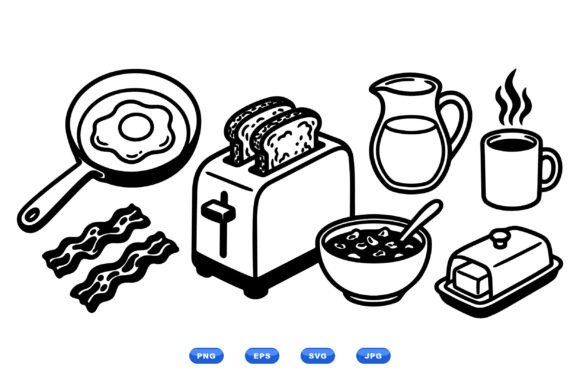
The premise is simple but effective: a line art vector illustrating a classic breakfast assortment featuring an egg, bacon, toaster, cereal, milk, coffee, and butter. It’s wholesome, nostalgic, and undeniably marketable. But for those of us in the embroidery business, "wholesome" doesn't always translate well to thread. So, let’s break down how this design performs when we move it from the screen to the fabric.
The First Impression: Mood and Visual Personality
What strikes me first about the Retro Breakfast Clipart Pack is its clean, uncluttered aesthetic. The line art style is perfect for machine embroidery because it relies on negative space rather than dense fills. In a world where everyone tries to cram every detail into a tiny square inch, this design breathes. It has a mid-century modern vibe that fits perfectly into current trends for kitchen decor and farmhouse-style apparel.
The layout suggests versatility. You aren’t locked into a single rigid composition. The individual elements—the steaming coffee cup, the crispy bacon strips, the cheerful toaster—can stand alone or come together as a scene. For a small shop product or an Etsy listing, this flexibility is gold. It allows you to create variations without designing from scratch every time. The visual personality is friendly and inviting, which is exactly what you want when you’re selling handmade products to people looking for personalized gifts or cozy home accents.
Real-World Application: From Screen to Stitch
I recently had a client request a custom embroidered tote bag for her bakery’s anniversary. She wanted something that screamed "fresh morning vibes" without being overly literal or childish. I immediately thought of the Retro Breakfast Clipart Pack. Here is how I envision this working in actual production scenarios:
- Tote Bag Design: The linear nature of the graphics works beautifully on canvas or cotton totes. A single element, like the retro toaster or the coffee mug, centered on a natural-colored tote creates a sophisticated look. It’s not loud; it’s chic. This elevates the item from a cheap promotional giveaway to a boutique accessory.
- Kitchen Towels and Aprons: This is arguably the strongest use case. Embroidering a full breakfast scene onto a linen tea towel adds immense value. The contrast between the textured fabric and the smooth satin stitches (if used) would look stunning. It’s the kind of item that sells itself during the holiday season or as a housewarming gift.
- Baby Embroidery: Soft pastels combined with these gentle shapes make for excellent baby clothes. A tiny embroidered bacon strip or a cute milk carton on a onesie is adorable but not overwhelming. It appeals to parents who want unique, high-quality items for their nursery.
- Sweatshirt Embroidery: For a more casual look, placing a smaller cluster of these icons on the pocket area of a sweatshirt adds a playful touch. It’s subtle branding that customers will appreciate for its craftsmanship.
However, we need to talk about the embroidery file aspect. Since this is a line art vector provided in SVG format, the magic happens in how you digitize it. If you are converting this yourself, you’ll want to pay close attention to the stitch density. Line art can easily become messy if the underlay is too heavy or if the top stitching is too sparse.
Where to Use It Carefully
No design is perfect for every surface. As an experienced reviewer, I have to point out where the Retro Breakfast Clipart Pack might struggle. Precision matters, especially when dealing with intricate details.
Avoid using this design on highly textured fabrics like heavy boucle wool or thick terry cloth unless you are using a substantial stabilizer and perhaps a hooping technique that minimizes distortion. The fine lines could get lost in the pile of the fabric. Similarly, stretchy knits require careful stabilization to prevent the breakfast scene from warping during washing.
Be cautious with small hoop sizes. While the simplicity of the line art helps, cramming all seven elements (egg, bacon, toaster, cereal, milk, coffee, butter) into a 3x3 hoop will result in a cluttered mess. The eye needs room to process the imagery. If you are making an embroidered patch or a cap front panel, stick to one or two key elements rather than the entire spread. Tiny lettering or extremely thin lines within the vector should also be tested first; sometimes, what looks like a hairline on a monitor becomes a broken thread path on the machine.
Practical Designer Notes for Production
Before you rush to print your mockups or list this on your shop, here are some practical steps to ensure your finished product looks professional:
- Test on Scrap Fabric: Always run a test stitch on the exact fabric you plan to use. Check how the thread colors interact with the material. A bright yellow butter stick might disappear on white fabric but pop on navy blue.
- Check Stitch Density: When digitizing, ensure the satin stitch edges are tight enough to cover the backing but not so thick that they pucker the fabric. Use fill stitch sparingly if you want to add depth to the cereal bowl or toast, but keep it light.
- Black and White Mockup: Convert your design to black and white to check contrast. This helps you see if the shapes are distinct enough without relying on color to separate them.
- Stabilizer Selection: For lightweight fabrics like jersey or silk, use a tear-away stabilizer. For heavier items like denim jackets or canvas totes, a cut-away stabilizer will provide better long-term durability.
- Licensing Check: Before selling any commercial embroidery projects, double-check the license terms. Ensure you have the right to sell physical goods made from the design assets. This protects your craft business from legal issues down the road.
Final Verdict
The Retro Breakfast Clipart Pack is a solid addition to any designer’s library. It offers a timeless theme that resonates with a wide audience, from hobbyists making personalized gifts to Etsy sellers looking for bestsellers. Its clean line art makes it adaptable to various embroidery project types, provided you respect the limitations of the medium.
It’s not just a graphic; it’s a mood. And in the world of handmade goods, mood is everything. Whether you are creating custom apparel, decorative pillows, or digital product previews for your own designs, this pack provides a reliable foundation. Just remember: good design starts with good preparation. Test your threads, stabilize your fabric, and let the quality of your stitching speak for itself. If you do that, the Retro Breakfast Clipart Pack will serve you well.