Retro Tough Girl Silhouettes: A Designer’s Review
As a designer who spends half my life staring at stitch density charts and the other half arguing with thread spools, I don’t just buy embroidery files; I interrogate them. When Retro Tough Girl Silhouettes landed in my inbox, I didn’t see it merely as a graphic file. I saw a potential bestseller for an Etsy shop, a statement piece for a custom sweatshirt, or perhaps the centerpiece of a boutique brand identity. But before committing to production, I had to ask: does this design hold up under the needle? Does it translate from vector perfection to textured fabric reality?
This review breaks down exactly how this design performs in real-world scenarios, focusing on the practicalities of machine embroidery, commercial viability, and aesthetic impact.
First Impressions: Attitude Meets Simplicity
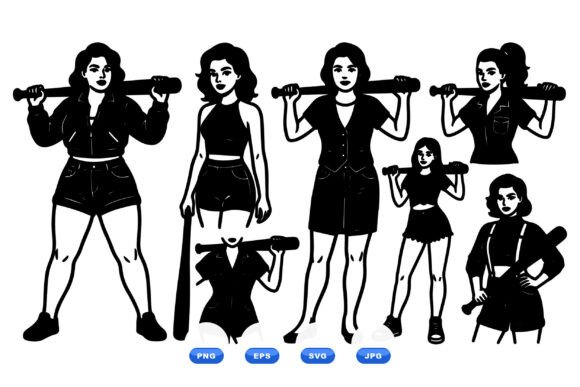
The moment you open the ZIP file, the mood is unmistakable. We are dealing with bold monochrome silhouettes that evoke classic tattoo flash art. The imagery features diverse women holding baseball bats—a visual shorthand for strength, confidence, and a touch of rebellious charm. For a designer, this is gold because the simplicity is intentional. There is no cluttered detail fighting for attention. Instead, there is a strong visual personality that reads instantly, even from across a room.
In the world of craft business assets, designs that rely on complex gradients often fail during digitization. They turn into muddy blobs of thread. Retro Tough Girl Silhouettes, however, thrives on negative space. This makes it incredibly versatile. It feels like a design born for custom apparel where the message is more important than the minute texture. It suggests a target audience that values empowerment, vintage aesthetics, and streetwear vibes.
Real-World Application: Where Does It Shine?
I put this design through its paces mentally and practically, imagining it on various substrates. Here is where Retro Tough Girl Silhouettes truly excels:
- Tote Bag Design: This is arguably the strongest use case. A large, centered silhouette on a canvas tote bag creates an immediate fashion statement. The high contrast works beautifully against natural cotton or black canvas. It transforms a simple utility item into a handmade product with serious editorial flair.
- Sweatshirt Embroidery: Think oversized crewnecks or cropped hoodies. Placing this design on the chest or as a large back print adds a layer of sophistication that screen printing sometimes lacks. The tactile nature of the stitches gives the "tough" theme a physical weight that resonates with the wearer.
- Embroidered Patch: If you are creating detachable patches for denim jackets or backpacks, the clean lines of the silhouette allow for a crisp satin stitch border. These make excellent personalized gift items for teens or young adults who love mixing textures on their gear.
- Boutique Branding: For small shop owners, this design can serve as a logo anchor. Imagine it embroidered on the pocket of a work apron or stitched onto a tea towel. It elevates everyday kitchen items into commercial embroidery pieces that feel curated rather than mass-produced.
The versatility extends to digital product sellers as well. Because the source is a vector, you can easily create printable mockups for clients to visualize the design on different garments before they commit to buying the embroidery file. This reduces returns and increases buyer confidence.
Technical Considerations and Potential Pitfalls
No design is perfect, and knowing where a design struggles is just as valuable as knowing where it succeeds. Here is what you need to watch out for when working with Retro Tough Girl Silhouettes.
Fabric Texture and Stability
Because the design relies on solid shapes, it looks best on stable fabrics. While it might look great on a thick cotton twill, testing it on highly textured fabrics like bouclé or loose-weave linen can be risky. The stitches may not lay flat, distorting the clean lines of the silhouette. Similarly, stretchy knits require careful hooping and potentially a tear-away stabilizer to prevent puckering. If you are embroidering on a cap or a curved surface, the tension must be dialed in perfectly, or the bat handle might appear jagged.
Scale and Detail
While the main silhouette is robust, always check the smaller elements. If the design includes tiny text or intricate background details, these will disappear if you try to shrink it down for a small hoop size. As a general rule, keep this design medium-to-large. Trying to cram it into a 4x4 inch hoop might result in a loss of character. Furthermore, if you plan to use satin stitch for outlines, ensure your digitizer has accounted for proper spacing so threads don’t bunch up.
Thread Color Contrast
The term "monochrome" in the description is key. This design demands high contrast. White thread on black fabric, or black thread on white fabric, will yield the sharpest results. Using pastel threads on light backgrounds will wash out the attitude of the piece. I recommend sticking to classic black, white, or perhaps a deep navy for a softer but still legible look. Avoid busy variegated threads here; let the shape speak for itself.
Stitch Density and Professional Finish
One of the biggest indicators of a quality machine embroidery design is how it handles fill areas. In this design, the bodies of the figures are likely filled with either a dense fill stitch or a combination of running and fill stitches to create a solid block of color. This is crucial for maintaining the silhouette’s integrity. If the stitch density is too low, the fabric shows through, breaking the illusion of the solid shape. Conversely, if it is too dense, the fabric may pucker, especially on lighter materials.
Before launching into a production run, always test the design on scrap fabric. Check the stabilizer choice—is it holding the fabric taut without leaving permanent marks? Inspect the edges of the silhouette. Are they clean, or do you see thread tails and jumps? A professional finish builds customer trust. When an Etsy seller delivers a product with messy stitching, the brand reputation suffers instantly. With Retro Tough Girl Silhouettes, assuming the digitization is sound, the risk of a sloppy finish is low, provided you follow standard embroidery protocols.
Commercial Viability and Licensing
For those looking to sell finished goods, understanding the license is non-negotiable. The product description mentions an instant download and a ZIP file, which typically implies a digital asset purchase. However, you must verify whether the license covers commercial embroidery rights for unlimited finished products. Some designers sell personal-use licenses only, while others offer commercial tiers. Always confirm this before listing your small shop product on marketplaces like Etsy or Amazon Handmade.
If you are a creative entrepreneur building a brand around empowerment and retro aesthetics, this design aligns perfectly. It taps into current trends favoring bold, graphic statements over subtle patterns. It appeals to a demographic that wants their clothing to say something about their values. This emotional connection drives engagement and sales.
Final Verdict
Retro Tough Girl Silhouettes is more than just a cute graphic; it is a functional, stylish, and commercially viable asset for any serious embroiderer. Its strength lies in its clarity and attitude. It translates exceptionally well to tote bags, sweatshirts, and patches, offering a high perceived value that customers are willing to pay for.
By keeping an eye on fabric choices, ensuring high contrast in thread selection, and verifying licensing terms, you can turn this vector into a standout finished product. It is a reliable tool in the toolkit of any embroidery project aimed at modern, style-conscious buyers. If you are looking to add a dose of retro cool to your inventory, this is a smart, practical choice.