Retro Homemaker Cooking Clipart Review
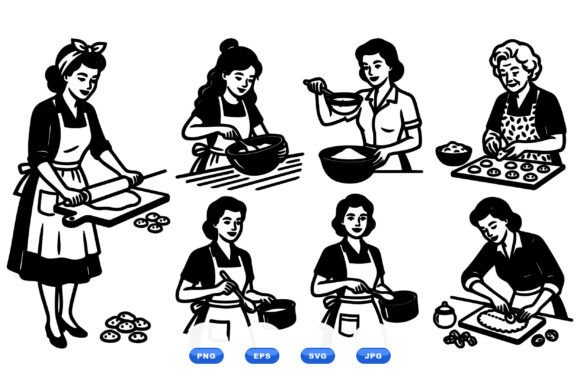
As a designer who spends more time staring at stitch lines than actual fabric, I approach every new asset with a healthy dose of skepticism. The market is flooded with generic clip art that looks beautiful on screen but falls apart when translated into thread. Recently, I pulled Retro Homemaker Cooking Clipart from the pile to see if it holds up in a real-world embroidery scenario. This mid-century retro kitchen scene, featuring women preparing pastries with rolling pins, bowls, and trays, promises a nostalgic editorial look. But does it work for your craft business? Let’s dig into the practicalities.
The First Impression: Mood and Visual Personality
The immediate draw of this design is its strong vintage aesthetic. It captures that specific mid-century modern vibe—clean lines, cheerful nostalgia, and a sense of domestic warmth. For an embroidery project aiming to evoke comfort or heritage, the visual personality is spot on. The layout feels balanced, which is crucial because complex scenes often get muddy when stitched.
What stands out is the editorial quality. It doesn’t look like cheap vector stock; it has the weight of a magazine illustration. When I imagine this on a custom apparel item, like a heavy cotton sweatshirt or a structured tote bag, it commands attention without shouting. The theme of baking and home cooking resonates deeply with target audiences who value handmade, artisanal goods. It’s not just a picture of a kitchen; it’s a feeling of hospitality, which is exactly what you want to sell in a small shop product.
Real-World Application: Where Does This Design Shine?
I tested the mental application of this machine embroidery design across several common product categories. Here is where it naturally fits:
- Kitchen Linens and Aprons: This is the most obvious fit. A high-quality linen apron embroidered with this pastry scene instantly elevates a basic gift into a boutique item. The rolling pin and tray details translate well to textile textures.
- Holiday Gifts and Corporate Swag: During the holiday season, nostalgia sells. This design works beautifully as a personalized gift for housewarmings or Christmas. It also serves as excellent commercial embroidery for bakeries or culinary schools looking for branded merchandise.
- Baby and Nursery Decor: While slightly mature for a newborn, the soft pastel potential of this palette makes it suitable for older toddlers’ rooms or nursery wall hangings. The “homemaker” theme adds a gentle, traditional touch.
- Etsy Seller Inventory: For digital product sellers, this digital embroidery file offers versatility. Whether sold as a physical handmade product or as a printable mockup for customers to visualize, the broad appeal ensures steady interest.
The design’s strength lies in its adaptability. It can anchor a large chest print on a sweatshirt embroidery piece or serve as a charming focal point on a smaller item like a tea towel.
Technical Considerations and Stitch Clarity
Not all graphics are created equal when converted to thread. With Retro Homemaker Cooking Clipart, the detail level is moderate, which is actually a positive. Highly intricate line art can become a tangled mess if the stitch density isn’t perfect. Here, the shapes are distinct enough to be recognized even if some fine details are simplified during digitizing.
When planning the execution, consider the following technical aspects:
- Stitch Types: You will likely rely heavily on fill stitch for the solid areas of the dresses and bowls, providing a rich texture. Satin stitch will define the outlines and key objects like the rolling pin handles, giving them crisp edges. Running stitch might be used sparingly for subtle shading or texture in the background, adding depth without clutter.
- Thread Colors: The success of this design hinges on color selection. To maintain the retro feel, avoid overly bright, synthetic neons. Opt for muted pastels, cream, sage green, or mustard yellow threads. High contrast between the thread and the fabric is essential for legibility.
- Stabilizer Choice: Because this design may have varying densities, using a cut-away stabilizer is recommended for stability, especially on stretchy knits or lightweight fabrics. This prevents puckering and keeps the embroidery file lying flat.
Pitfalls to Avoid: Where Caution Is Needed
Even great designs have limitations. There are specific scenarios where Retro Homemaker Cooking Clipart might struggle:
- Small Hoop Sizes: If you attempt to shrink this down too far, the individual elements (bowls, trays) may merge into an indistinguishable blob. Ensure your hoop size allows for adequate spacing between details.
- Textured or Stretchy Fabrics: On heavily textured weaves like burlap or highly stretchy jersey, the definition of the mid-century lines can be lost. Always test on scrap fabric first.
- Dark Fabrics: While possible, stitching light pastel threads onto dark fabric requires a high thread count to prevent show-through. This increases stitching time and cost. Lighter backgrounds generally yield better results for this specific color palette.
- Dense Stitch Areas: Be mindful of overlapping dense fills. If the digitizer did not account for underlay properly, thick layers of thread can create a stiff, uncomfortable hand feel on garments like custom apparel.
Impact on Brand and Customer Trust
Using a cohesive, high-quality aesthetic like this strengthens your brand identity. Customers associate professional-looking embroidery with reliability. When a buyer sees a clean, well-executed embroidered patch or tote bag design, they perceive higher value. This design supports that perception by offering a polished, editorial look that feels intentional rather than accidental.
For Etsy sellers and craft business owners, this translates directly to conversion rates. A clear, attractive design reduces buyer hesitation. It suggests that the maker cares about detail, which builds trust. Furthermore, the nostalgic theme triggers an emotional response, making the item more memorable and shareable on social media platforms like Pinterest or Instagram.
Final Designer Notes
Before committing to a full production run or listing this as a small shop product, take these steps:
- Test on Scrap Fabric: Always stitch out a sample to check for tension issues and color contrast.
- Review Black and White Mockups: Convert the design to grayscale to ensure the shapes hold up without the crutch of color.
- Check Licensing: Confirm whether the design assets allow for commercial use on finished products. This is critical for any commercial embroidery venture.
- Inspect Small Details: Zoom in on the digital preview. Are the rolling pins and trays distinct? If details are too thin, they may require simplification in the digitizing process.
In conclusion, Retro Homemaker Cooking Clipart is a versatile, aesthetically pleasing choice for designers looking to tap into the nostalgia and home-cooking markets. It balances visual charm with technical feasibility, making it a strong candidate for everything from holiday embroidery gifts to everyday handmade product lines. Just remember to respect the limits of the hoop size and fabric type, and you’ll have a winning finished product on your hands.