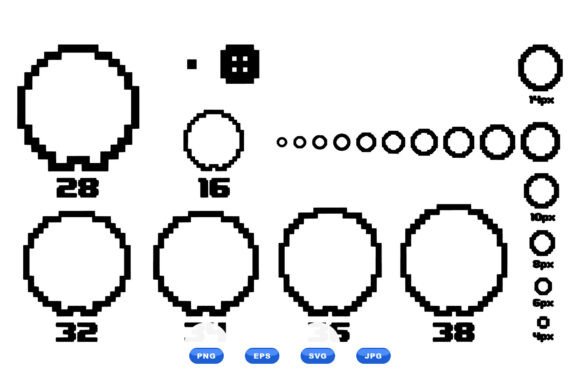
Retro Pixel Circle Clipart Review
When I sit down to evaluate a new digital asset for my embroidery studio, I am rarely looking at it as just a pretty picture. I am looking at it as a technical blueprint for what will eventually live inside a hoop, stitched into fabric, and sold to a customer who expects quality. Today, I am putting Retro Pixel Circle Clipart through the wringer. This is not just about aesthetics; it is about whether this set of pixelated circular frames can survive the transition from screen to stitch without losing its soul or falling apart under tension.
The First Impression: Mood and Visual Personality
At first glance, Retro Pixel Circle Clipart screams nostalgia with a modern, minimalist twist. The low-resolution outline aesthetic immediately evokes the early days of gaming and UI design, but the monochrome mood keeps it grounded and versatile. For an embroidery designer, the immediate appeal here is clarity. Unlike intricate floral patterns that can get lost in complex fabric textures, these geometric shapes are bold and distinct.
The visual personality is playful yet structured. It feels like something you would see on a boutique sweatshirt or a curated Etsy listing for handmade accessories. The multiple sizes included in the set suggest versatility, allowing me to create focal points or subtle background accents depending on the scale of the project. It creates a specific mood—cool, digital, and slightly ironic—that resonates well with contemporary craft trends.
Real-World Application: From Screen to Stitch
I recently had a client request a custom embroidered tote bag for a local tech conference. They wanted something that looked "digital-native" but still felt handmade. Retro Pixel Circle Clipart was the perfect candidate. The pixelated edges translate surprisingly well into machine embroidery, provided the stitch density is managed correctly. When stitched, the hard edges of the pixels mimic the blocky nature of the original graphic, creating a charming, retro vibe that stands out against canvas or denim.
Beyond tote bags, this design fits seamlessly into various categories of handmade product lines. Imagine these circles used as decorative borders on a sweatshirt embroidery project, framing a logo or text. Or perhaps used as standalone motifs on baby embroidery items, where the simple geometry is safe and visually stimulating without being overwhelming. The minimalist monochrome mood makes it an excellent choice for holiday embroidery gifts, particularly for those who appreciate geek-chic or retro-gaming culture.
For Etsy sellers and small shop owners, this design offers high value because it pairs easily with typography. You can place a pixel circle behind a quote or above a brand name to add visual weight without cluttering the composition. It enhances the printable mockup potential, making your digital previews look polished and professional before the physical item is even made.
Technical Challenges and Where to Be Careful
However, no design is without its pitfalls. As an experienced reviewer, I must highlight where Retro Pixel Circle Clipart requires caution. The primary concern is stitch density. Because the design emphasizes outlines, there is a risk of puckering if too many threads are packed into small areas. If you are using a dense fill stitch to recreate the pixel blocks, you may find the fabric distorting, especially on thinner materials.
This design should be used carefully on textured fabrics like heavy tweed or bouclé, where the definition of the pixel edges might get lost. Similarly, on stretchy fabric such as jersey knits, the rigid geometric shape can fight against the natural movement of the material, leading to misalignment during the stitching process. Always test on scrap fabric first to ensure the stabilizer is providing enough support.
Another area requiring attention is hoop size. While the set comes in multiple sizes, attempting to stitch the smallest variations in a tiny hoop can lead to needle breaks or thread tension issues. The running stitch used to define the outer perimeter needs enough space to lay flat. If the design is scaled down too much, the individual pixels may merge, turning a crisp retro graphic into a muddy blob. Furthermore, on dark fabric, you must choose thread colors with sufficient contrast. A black-on-black pixel circle will simply disappear, ruining the visual appeal and making the finished product look unfinished.
Material and Surface Limitations
Avoid placing this design on curved surfaces like caps or hats unless you have advanced digitizing skills to compensate for the curve distortion. The straight lines of the pixel grid will warp, potentially breaking the illusion of the retro aesthetic. Also, be mindful of layered garments; adding extra bulk with thick satin stitches around the circle frame can make seams uncomfortable or cause the layers to pucker over time.
Impact on Product Value and Brand Consistency
When executed correctly, Retro Pixel Circle Clipart significantly boosts the perceived value of a finished product. It signals that the maker understands current design trends while respecting traditional craftsmanship. Customers often associate clean, intentional geometry with professionalism. In the context of commercial embroidery or craft business branding, using consistent graphic elements like these helps build a recognizable visual identity.
The design’s simplicity also aids in buyer engagement. It is easy to understand at a glance, which is crucial for online shoppers scrolling through feeds. Whether it is part of a custom apparel line or a standalone embroidered patch, the clear visual language communicates style quickly. It works exceptionally well for personalized gifts where the recipient appreciates niche interests, such as vintage computing or 8-bit art.
Practical Designer Notes for Implementation
To get the best results from this asset, follow these practical steps:
- Test on Scrap Fabric: Never commit to a final piece without running a test stitch. Check how the thread interacts with your chosen fabric weave.
- Check Thread Color Contrast: Ensure the thread color pops against the fabric. Monochrome designs rely heavily on tonal contrast.
- Review Stitch Density: Adjust the digitization to reduce unnecessary density. Let the negative space breathe.
- Confirm Hoop Size: Make sure the design fits comfortably within your standard hoops to avoid edge trimming issues.
- Inspect Small Details: Zoom in on the digital file. Are the pixel gaps wide enough to be stitched cleanly?
- Use Proper Stabilizer: Choose a cut-away stabilizer for stretchy fabrics and tear-away for stable wovens.
- Verify Licensing: Before selling small shop products or design assets, confirm the commercial use rights of the digital file.
In conclusion, Retro Pixel Circle Clipart is a strong addition to any embroidery designer’s toolkit. It bridges the gap between digital graphics and tactile crafts beautifully. With careful attention to stitch quality and fabric choice, it can elevate everything from a simple kitchen towel to a high-end boutique branding element. It is a testament to the fact that good design transcends mediums, bringing a fresh, retro energy to every embroidery project it touches.