Retro Women Portrait Clipart
As a designer who spends more time than I care to admit staring at stitch density charts and troubleshooting thread breaks, I approach every new embroidery file with a mix of hope and skepticism. We have all been there: you download a trendy asset, excited to create the next best-selling item for your Etsy shop or a personalized gift for a friend, only to find that the design falls apart when it hits the hoop. Today, I am evaluating a specific digital asset titled Retro Women Portrait Clipart. This is not just about whether the image looks good on a screen; it is about how this graphic translates into a physical, stitched reality for craft business owners, Etsy sellers, and serious hobbyists.
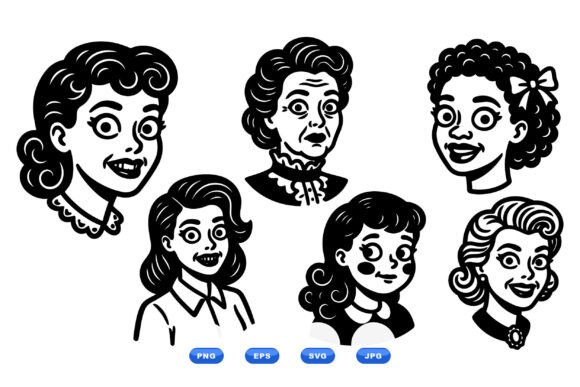
The product description highlights a tattoo flash sheet aesthetic featuring six vintage women heads in bold line art. It is delivered as an instant download including SVG, EPS, and PNG formats. For those of us working in Crafts and Graphics, this format versatility is crucial, but the real test lies in the visual personality and practical application of the design itself.
First Impressions and Visual Mood
When you first load the vector files for Retro Women Portrait Clipart, the immediate takeaway is its strong graphic identity. The "tattoo flash" style is distinct. It relies on high-contrast lines and clean shapes rather than subtle gradients or photorealistic shading. From a design perspective, this is a huge advantage for embroidery. Machine embroidery struggles with soft transitions and delicate details that can blur together. Bold line art, however, translates beautifully into satin stitches and clean fill areas.
The mood is nostalgic yet edgy. It evokes the mid-century pin-up era mixed with modern streetwear aesthetics. This makes it incredibly versatile for custom apparel. You are not limited to traditional floral or cute motifs; this design brings attitude. It feels like something you would see on a boutique brand’s hang tag or a high-end streetwear label. For creative entrepreneurs looking to stand out in a saturated market, this kind of distinctive visual language helps build brand recognition faster than generic clipart.
Real-World Application: The Tote Bag Scenario
To truly understand the value of this design, let’s imagine a real project. You are preparing a batch of canvas tote bags for a local craft fair. Your goal is to create a handmade product that appeals to young adults who appreciate vintage aesthetics. You choose Retro Women Portrait Clipart for the central motif.
Because the original artwork is a sheet of six heads, you have flexibility. You might isolate a single portrait for a focused, elegant look on the front of the bag, or you could arrange multiple smaller portraits in a scattered pattern across the bottom hem for a more eclectic vibe. The bold lines ensure that even if the customer is wearing the bag in a busy environment, the design remains legible from a distance. This clarity is essential for commercial embroidery where the first impression matters.
Furthermore, this design works exceptionally well for personalized gifts. Imagine gifting a custom embroidered sweatshirt to a friend who loves retro fashion. The high-contrast nature of the vector art means that even if you use a slightly textured fabric, the design will pop. It adds a layer of professionalism to what could otherwise be a simple DIY project, elevating it to a small shop product worthy of premium pricing.
Technical Performance in Embroidery
Translating vector line art into stitches requires careful planning. Here is how Retro Women Portrait Clipart typically performs in common embroidery techniques:
- Satin Stitch Outlines: The bold lines are perfect for satin stitching. This technique creates a smooth, raised edge that defines the shape of the vintage faces. It gives the design a tactile quality that flat printing cannot achieve.
- Fill Stills: If you decide to add color blocks within the hair or background elements, the clean geometry of the vector allows for efficient fill stitches without excessive jumping or trimming.
- Running Stitch Accents: For a lighter, more sketch-like feel, you might use running stitch for finer details. However, given the "flash sheet" style, satin is usually the superior choice for durability and visual impact.
One critical factor is stitch density. Because the original art is line-based, you must ensure that your digitizing software (or the provided file) does not over-stitch the thin lines. Too much density can cause puckering, especially on lightweight fabrics. Conversely, too little density might make the lines look faint. Testing on scrap fabric is non-negotiable here.
Where to Use It Carefully
While this design is robust, it is not suitable for every surface. There are specific scenarios where Retro Women Portrait Clipart might struggle:
- Small Hoop Sizes: If you attempt to stitch one of the detailed portraits in a very small hoop (under 3 inches), the fine lines may merge. The design loses its character if the eye cannot distinguish between the outline and the internal details. Stick to medium to large hoops for the best result.
- Textured or Stretchy Fabrics: While canvas is ideal, trying to embroider this on highly textured chenille or thin, stretchy jersey without proper support can lead to distortion. The bold lines might warp if the fabric shifts during stitching.
- Dark Fabric Without Underlay: If you are using light-colored threads on dark fabric, you need a solid underlay stabilizer. Otherwise, the base fabric might show through the stitches, muddying the high-contrast look that makes this design special.
- Detailed Corners: Avoid placing intricate parts of the portrait near the edge of a cap or hat where the curve might distort the straight lines of the face.
Impact on Product Value and Branding
Using a high-quality vector source like this directly impacts customer trust. When a buyer receives a finished product with crisp, clean embroidery, they perceive higher value. Blurry or pixelated designs signal low effort. In contrast, the sharp edges of Retro Women Portrait Clipart suggest professionalism.
This is particularly important for apparel decorators and boutique branding. A consistent visual style helps your shop become recognizable. If you pair these vintage portraits with complementary typography and earthy thread colors, you create a cohesive brand story. It signals to your audience that you care about aesthetics and detail.
Practical Designer Notes
Before you commit to a full production run, follow these steps to ensure success:
- Test on Scrap Fabric: Always run a test stitch on the exact fabric you plan to use. Check how the thread colors interact with the material.
- Check Stabilizer Choice: For woven fabrics like cotton or canvas, a cut-away stabilizer is often best for durability. For knits, a tear-away might suffice depending on the weight.
- Review in Black and White: Convert your mockup to grayscale. This helps you verify that the contrast levels are sufficient for stitching. If it looks muddy in black and white, it will likely look muddy in color.
- Confirm Licensing: Since you are likely using this for digital product sellers or physical goods, double-check the license terms. Ensure you are allowed to sell finished items created with this design.
- Inspect Small Details: Zoom in on the eyes and mouth of the vintage women. These are the focal points. Ensure the digitized version captures the expression clearly.
In conclusion, Retro Women Portrait Clipart is a strong candidate for designers looking to add a touch of vintage flair to their embroidery project list. Its bold, high-contrast style is forgiving yet striking, making it suitable for everything from holiday embroidery gifts to custom apparel for your online store. By respecting the technical limitations of machine embroidery and choosing the right materials, you can transform this digital asset into a tangible, high-value product that resonates with customers.